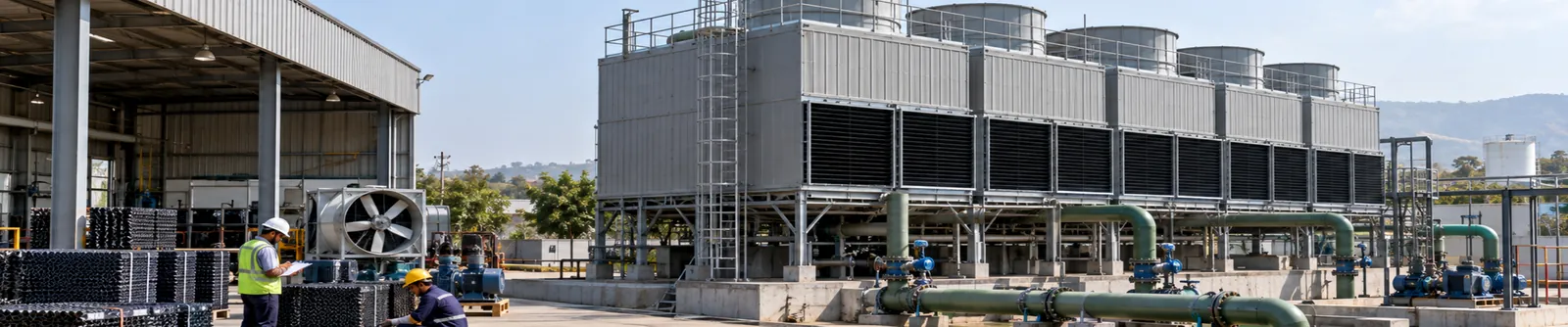
The routine maintenance assists in maintaining a cooling tower in a proper operating state by enabling the verification of its parts and general state of the system at specific intervals. Since the tower is still in operation, normal wear and operation may cause various parts of the system to get affected and therefore, prompt inspection may be used to determine the areas that could be of interest to be checked before they can be turned into a bigger problem of maintenance.
This renders maintenance as significant to consistency in operation of the cooling tower over the years. Using a planned maintenance strategy, operators can keep track of the system state, mitigate the discovered problems, and lessen the risk of unnecessary interruptions. The specifics of maintenance activities may depend on the type of tower, the conditions of its operation, and the state of its parts.
-
Performance monitoring: Frequent check-ups assist in seeing whether the cooling tower is working as per the expectations or not.
-
Early identification:Inspection will be able to detect emerging component or operating problems at an earlier stage.
-
Reduced interruptions:Timely maintenance will work to resolve problems before they disrupt normal operation.
-
Component care: Performing periodic maintenance to make significant cooling tower components remain in the right condition.
-
Planned upkeep: An organized maintenance process simplifies the process of scheduling of inspections and necessary corrective work.
Cooling Tower Maintenance Process: Key Steps Explained
An effective maintenance procedure will start with examination of the existing condition of the cooling tower and the points that need to be attended to. The inspection proceeds then to the key components and operating points of the system and in a process enables visible problems, component wear and other maintenance requirements to be detected in a systematic way. This provides a definite foundation on which activities to undertake in the maintenance cycle.
After the inspection is carried out, the necessary maintenance is planned based on the state of the tower and its elements. This is followed by another checking of the system to make sure that the identified concerns have been addressed by the work. This process-based method of approach makes the maintenance more organized and assists in maintaining the tower to be in a position to work on.
-
Initial inspection:Examine the overall condition of the cooling tower before starting maintenance activities.
-
Component checking: Check the pertinent parts to determine the wear, damage or any other conditions that need to be taken care of.
-
Maintenance work:Perform the required maintenance depending on the results of the inspection.
-
Condition verification: Following maintenance, recheck the system and verify that concerns identified have been addressed.
-
Maintenance planning:Document observations and utilize them to plan further maintenance.
Cooling Tower Maintenance Checklist
Cooling tower maintenance checklist helps to unite the key inspection points in a way that allows maintenance operations to be conducted in a uniform and structured way. Rather than examining the components at random, the checklist offers a feasible order in which the tower and its operating components and visible conditions should be looked at to enable the maintenance workers to monitor what has already been reviewed and what might need future scrutiny.
The checklist is flexible and can be modified to suit the type of cooling tower being used, conditions and maintenance schedule. With the observations being documented at every inspection, the same problems may be detected more readily, and the elements, which will have to undergo corrective efforts, may be traced at the next maintenance check. This renders the checklist a valuable guide to continue the continuity between regular check-ups.
-
Tower condition: Determine the general physical condition of the cooling tower: deterioration or damage.
-
Water system: Check areas of water handling, and note situations that can interfere with normal circulation.
-
Mechanical components:Check available mechanical parts due to wear, looseness or uncharacteristic state.
-
Electrical components: Inspect pertinent electrical connections and working parts to look at obvious problems.
-
Airflow components: Check fans and related components to determine possible conditions that impact airflow.
-
Water distribution:Check the supply system to make sure that water is reaching the target locations.
-
Records: Inspect documents and record details of components and areas that need follow-up action.
How to Choose a Cooling Tower Maintenance Company
When selecting a cooling tower maintenance companies amongst various options available, it is not just a matter of comparing the availability of the services, as the state and the structure of each cooling tower may vary. The questions to be addressed are whether the company is aware of the kind of tower under service, has the capability to check its related parts and determines the maintenance requirements based on the actual condition of the system operation.
An appropriate service provider must also be in a position to manage the maintenance needs identified during inspection other than taking the same approach with all the towers. With its experience in manufacturing of cooling towers, as well as its service provision of cooling tower repairs and maintenance services, S.P. Cooling Towers Pvt. Ltd. has a relevant service to offer to the industrial cooling tower needs.
-
Relevant experience: Relevant experience to type and configuration of cooling tower under maintenance.
-
Inspection approach: Determine whether the company is assessing the real state of the tower prior to prescribing maintenance work.
-
Component knowledge:Seek knowledge of the key components and operating parts of cooling tower systems.
-
Repair capability: It is important to consider whether the identified maintenance problems can be fixed with the help of the necessary repair work.
-
Service scope: Determine the appropriateness of the maintenance offering of the company in relation to your cooling tower system needs.
Industrial Cooling Tower Maintenance
Cooling Tower Maintenance includes a periodic inspection, cleaning and checking of the various parts of cooling towers to ensure their reliability. We take a proactive stance to solve problems such as wear, airflow or water distribution problems and other emerging problems before they impact normal operation.
-
Routine inspection: Inspect the overall condition of the tower and critical operating areas.
-
Inspect mechanical, electrical, fan and water distribution components.
-
Cleaning: Wash away dirt and unwanted deposits in the appropriate areas of the system.
-
Early detection of issues – find out if there are any signs of wear or operating issues before they become a problem.
-
Recheck serviced areas for condition following maintenance.
Common Cooling Tower Problems Caused by Poor Maintenance
This is because poor maintenance may ensure that small malfunctions in operation escape detection until they start to impair the normal operation of the cooling tower. Unless the components are checked frequently, issues like limited airflow, uneven water flow, wear or other forms of operating abnormalities occurring in the components may build up and add extra pressure on the system.
These conditions can disrupt the cooling process that should be carried out by the tower as they proceed with no remedial measures and can lead to more remedial work. Frequent inspection will assist in revealing these conditions at the earlier stage, where the maintenance teams can decide what to do before a manageable problem escalates into a bigger problem.
-
Restricted airflow: The free conditions surrounding airflow parts may interfere with the airflow within the tower.
-
Uneven water distribution:The distribution of water may not reach the target areas effectively due to problems within the arrangement.
-
Component wear: While a system may continue to run it may still wear out some significant components without anyone noticing.
-
Operating abnormalities: Operating abnormalities: When normal operations are not performed, any changes in them might go unnoticed.
-
Corrective requirements: Delayed attention may transform relatively small maintenance issues to problems that involve more comprehensive tasks.
Benefits of Regular Cooling Tower Maintenance Services
Periodic maintenance is used to maintain a cooling tower in a maintained and serviceable condition during its operating cycle. Through detecting maintenance requirements at regular intervals, operators are able to deal with the emerging problems before they are more disruptive and maintain more visibility of the state of the tower and its parts.
This intended strategy can also simplify the maintenance requirements since the required work can be identified and planned instead of being done when some unforeseen problem arises. Consequently, regular care of the system may lead to a more efficient functioning, improved control of the components and reduced unnecessary maintenance issues.
-
Consistent operation: The cooling tower should be in an appropriate state of operation to ensure it is maintained.
-
Early intervention: Problems can be detected at an early stage when they can be resolved more easily.
-
Better component management: Periodic inspections help to increase the visibility of the state of separate components.
-
Reduced unexpected work: Planned maintenance may result in fewer instances of maintenance being caused by unforeseen issues.
-
Long-term upkeep:A consistent maintenance program develops a consistency in how the cooling tower is monitored and maintained.
How Often Should a Cooling Tower Be Serviced?
The frequency of cooling tower servicing depends on the type of the tower, the condition in which it is used, the pattern of its use and the condition of its parts. A tower which must work continuously in a strenuous industrial environment may need more frequent maintenance than a system which has to work shorter hours, thus a fixed interval would not be suitable to all installations.
Rather, the servicing must be scheduled based on the actual condition and operational needs of the tower, and the routine checks will assist in determining when additional work is required. Having a regular schedule also enables detecting changes in component state and scheduling servicing before a developing problem can cause a disruption in normal operation.
-
Operating hours: The towers that have a longer or continuous operating time might need closer and more frequent inspection.
-
Working conditions: These are the conditions around the environment as well as the process that can affect the servicing requirements.
-
Tower type: The various types of cooling towers may have varying inspection and maintenance requirements.
-
Component condition: Operating conditions can be visible or changing, this can be a sign that the servicing is needed earlier.
-
Inspection findings: The results of the inspection can be used to determine when the next service will be conducted.
Keep Your Cooling Tower in Better Condition — Discuss Your Maintenance Requirements with S.P. Cooling Towers Pvt. Ltd.