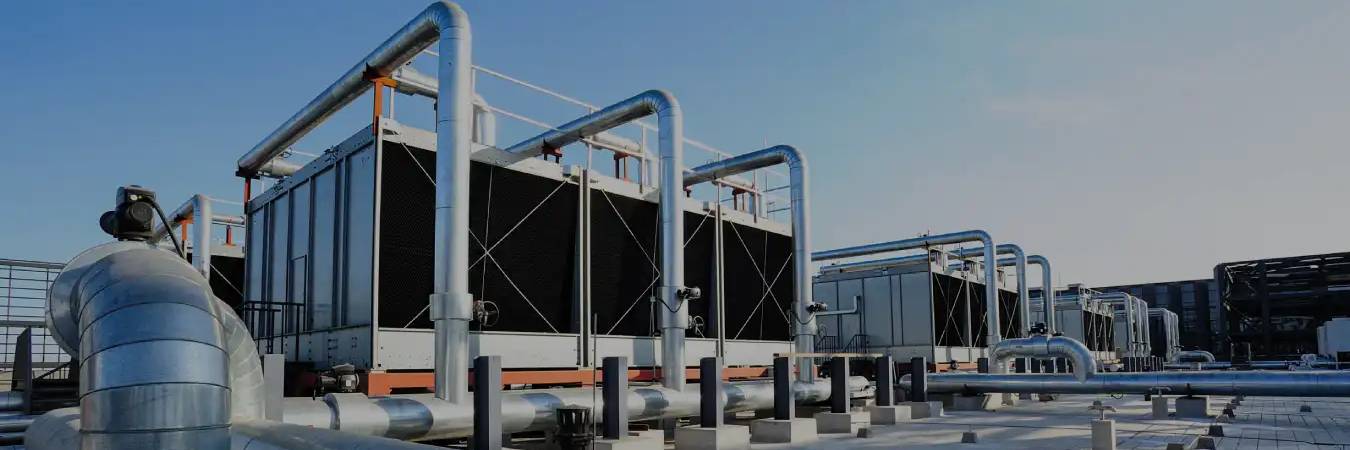
Imagine your plant is a kitchen. Machines run for hours and become just as hot as a cook stove. Cooling towers remove that heat so your machines stay cool and keep cooking.
Choosing an industrial cooling tower is not the same as shopping for something on the shelf. Two towers may look identical but behave completely differently on your site. This forced draft cooling tower buying guide will walk you through what to look for before you buy an industrial cooling tower.
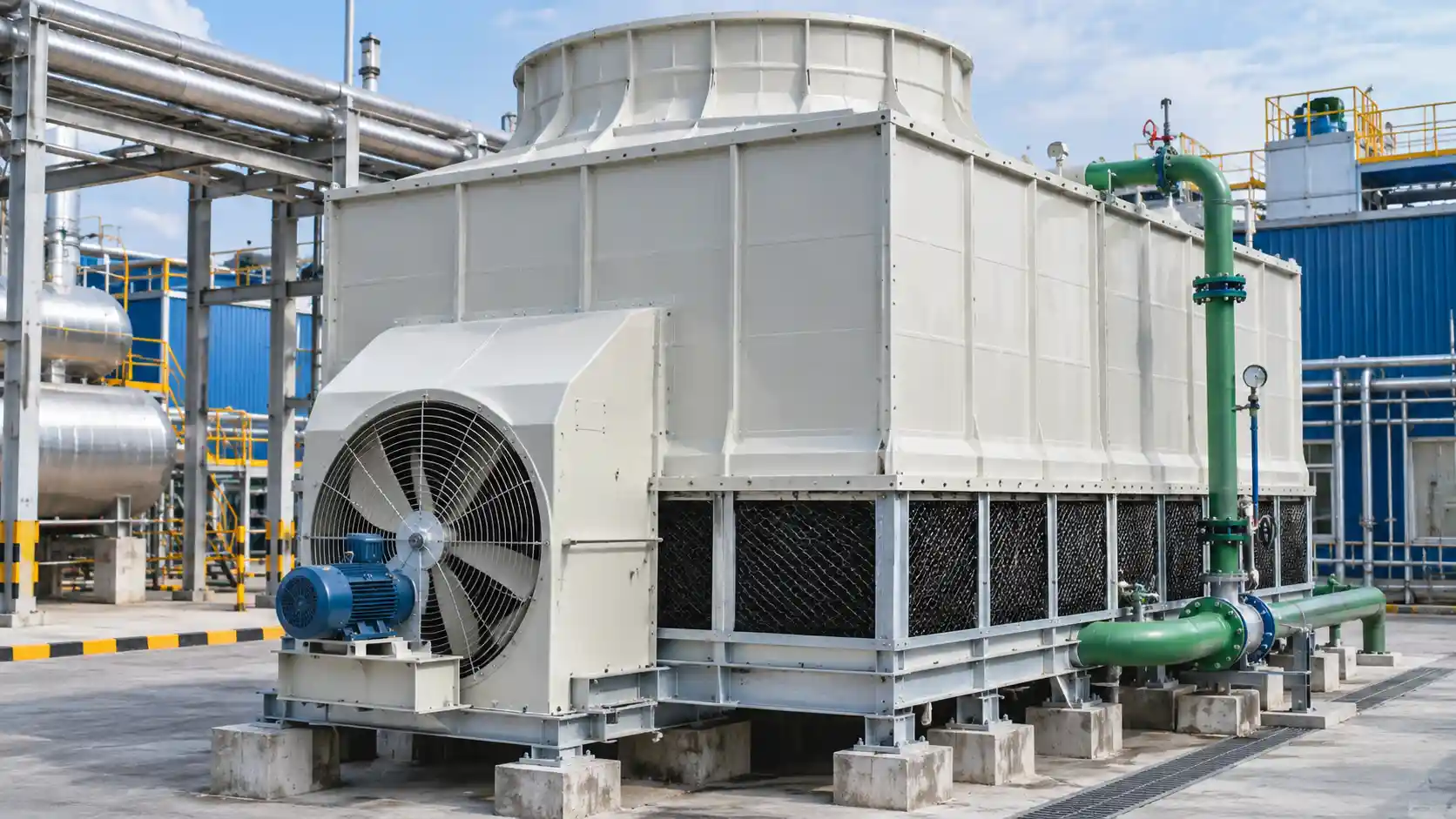
In a Forced Draft Cooling Tower, the fan is installed at the air inlet and blows air in. That air travels through the wet surface of water falling in the tower, and some of the water forms vapour that absorbs heat. Others exit as cooler water back to your process.
A weak fan is warm water. A badly matched fan wastes one amp of electricity every hour it is on.
That's why you need to be careful with forced draft cooling tower selection. The corrosion-resistant nature of fibre reinforced plastic makes it ideal for a FRP forced draft cooling tower to successfully remove wet, humid air. Just make sure its size is right for you.
Perform these seven technical audits on every supplier quote before ordering to prevent undersized capacity, higher power costs, and early equipment failure.
Begin with the cooling tower heat load: how much heat does your process need to reject. To determine this, you require the water flow and the hot water temperature going in with the desired water leaving water temperature. The difference between the hot and cold water temperature is called the cooling range.
Flow rate is insufficient to indicate forced draft cooling tower capacity. A plant that cools their water 10°C at the same flow rate as one that only cools it 5°C.
Air can only contain a finite amount of moisture. The cooling tower wet-bulb temperature tells you what that is at your location. A hot, sticky day means the air is already at capacity so the water doesn't get cooled as much. Cooling tower approach is the difference between the chilled water leaving the tower and the wet-bulb. The smaller the approach, the larger the tower.
Find out the wet-bulb reading your supplier used. A value taken on a cool, dry day will not be accurate for the monsoon.
Good cooling tower fan selection begins here The fan is the soul of a forced draft tower. It needs to overcome the resistance of the fill and the drift eliminators and still move adequate airflow. A fan that can't overcome the resistance is going to provide less forced draft cooling tower airflow than the datasheet.
Request the airflow, the amount of pressure the fan can hold as well as the rating of the motor. A quick motor can last for years and uses power.
Cooling tower fill media is the layered stuff which makes the water come into thin films with air blowing over so water cools down faster. Types like PVC and PP and the suitable one is dependent on your water. Water gets sprayed into the fill with nozzles. Even cooling tower water distribution matters, because uneven spray hurts cooling.
Inform your dealer if your water is hard or if you have gunk and chemicals.
A Good FRP Forced Draft Cooling Tower won't rust, but not all manufacturers use good quality. What material is used for the construction? The resin used and the panel thickness should be asked. It is important to know about basin, fasteners, motor protection and drift eliminators, which prevent water particles from escaping.
If you have chemicals in your water or air, mention so now, as you may require a special resin.
Forced draft cooling tower installation begins at the site. Review the foundation and all design elements that determine the load such as pipe connections, spaces around the fan inlet. Provide for access to the fan, motor, and fill.
Beware of hot-air recirculation. As hot, moist air is exhausted slowly from a forced draft tower, it can blow back to the inlet, resulting in cooling losses. A thoughtful industrial cooling tower layout avoids placing walls and other towers near the inlet.
The lowest forced draft cooling tower price may not be the cheapest. The ultimate cost of the forced draft cooling tower is another factor to be considered. The cost over its entire life cycle is also paid in the form of fan power, spare parts and maintenance.
Ask about support too. Good quality forced draft cooling towers suppliers will come with all necessary drawings, technical information and be able to deliver spares on time.
The quality quotations will start to be built from the good data. Collect these data before calling the suppliers:
Now they are pre-heated, all suppliers are quoting for the same thing, therefore cooling tower procurement is easy.
Quotations are only directly comparable if all providers are providing the same duty i.e. same flow, same temperatures and same wet-bulb. Compare these points in order:
| Point | What to compare |
|---|---|
| Fan power | Motor rating and airflow offered |
| Fill | Type, material and quantity |
| Materials | FRP grade, fasteners, basin |
| Warranty | Length and what is covered |
| Installation scope | What is included and excluded |
| Documentation | Drawings, data sheets, certificates |
When you compare Forced Draft Cooling Tower Manufacturers In India, find out if transport, installation and commissioning are included in the price. A comprehensive cooling tower price comparison considers it all.
Most of these issues start during the buying process. Don't make these cooling tower buying mistakes:
SP Cooling Towers has been manufacturing cooling towers since 2004 and has been awarded ISO 9001:2015 certification. All FRP moulding and machining are carried out at their own factory located near Delhi NCR.
All FRP forced draft towers are custom designed and built to your flow, heat load, temperatures and site to have the ideal combination of performance, safety, and reliability. The fans, motors, fills, nozzles and drift eliminators are selected for your application, and the team will advise you on the critical numbers before you finalise. SP as one of the best forced draft cooling tower suppliers in India also provides spares for any make and export customers.
The job of picking a Forced Draft Cooling Tower gets easier as you consider a few factors. Verify the heat load and wet-bulb conditions initially. Consider the fan, fan motor, fill, FRP structure, space and design, and the service that you will receive at delivery. Make a comparison of the quotes on the same criteria, and focus on the entire cost, not just price.
Prior to you seeking an industrial cooling tower quotation, get in touch with SP Cooling Towers, one of the relied on industrial cooling tower suppliers.
|
Looking to Purchase a Forced Draft Cooling Tower? Send us your water flow, heat load, temperature, and plant information and we will provide a quote tailored to your plant. |
Things you need to have are the water flow, heat load, hot and cold water temps, site wet-bulb, water quality, space and hours of operation.
No. Performance at your design conditions is what is important. You will waste power and money if you oversize the tower.
The cost is based on the cooling duty, FRP specification, fan and fill options, modifications and scope of supply, be that including installation or delivery.
A forced draft tower has the fan at the air inlet, blowing air in. An induced draft tower has the fan at the top, pulling air out. Forced draft fans are accessible, but must be arranged so they don't cause recirculation.
Since FRP doesn't rust and is resistant to moisture, it's a good fit for the damp, humid environment inside a tower.
Share the flow rate, hot and cold water temperatures, and site wet-bulb for tower selection and a budgetary estimate.