Go out onto the terrace of any refinery, steel plant or powerhouse, and you are likely to see some tall building quietly throwing its soft plumes of vapor into the air. That building performs one of the hardest, least prestigious jobs in the industry: to remove surplus heat in the water to keep the machines not self-cooking and halting the production. Cooling towers hardly ever receive the limelight, but without them, factories, refineries and power stations would come to a halt within hours and repair costs would get high in a short time. This guide will take you through the various types of these towers, how they work, what these towers are, and where they are actually applied in Indian industry today to make the right decision on which tower to install in your own plant.
An industrial cooling tower is a heat-rejection device that cools processed water by exposing it to atmospheric air, typically via evaporation. The condensers of a plant supply hot water into the tower, which is dispersed as droplets or thin films and is exposed to a stream of air. Some water is evaporated, and the heat is carried away by it, and the cooled water is recirculated into the system. Any reputable cooling tower company will design such units to be capable of continuous heat loads of enormous size without collapsing, since the loss of production can help to reduce lakhs of rupees per hour. In short, a cooling tower typically:
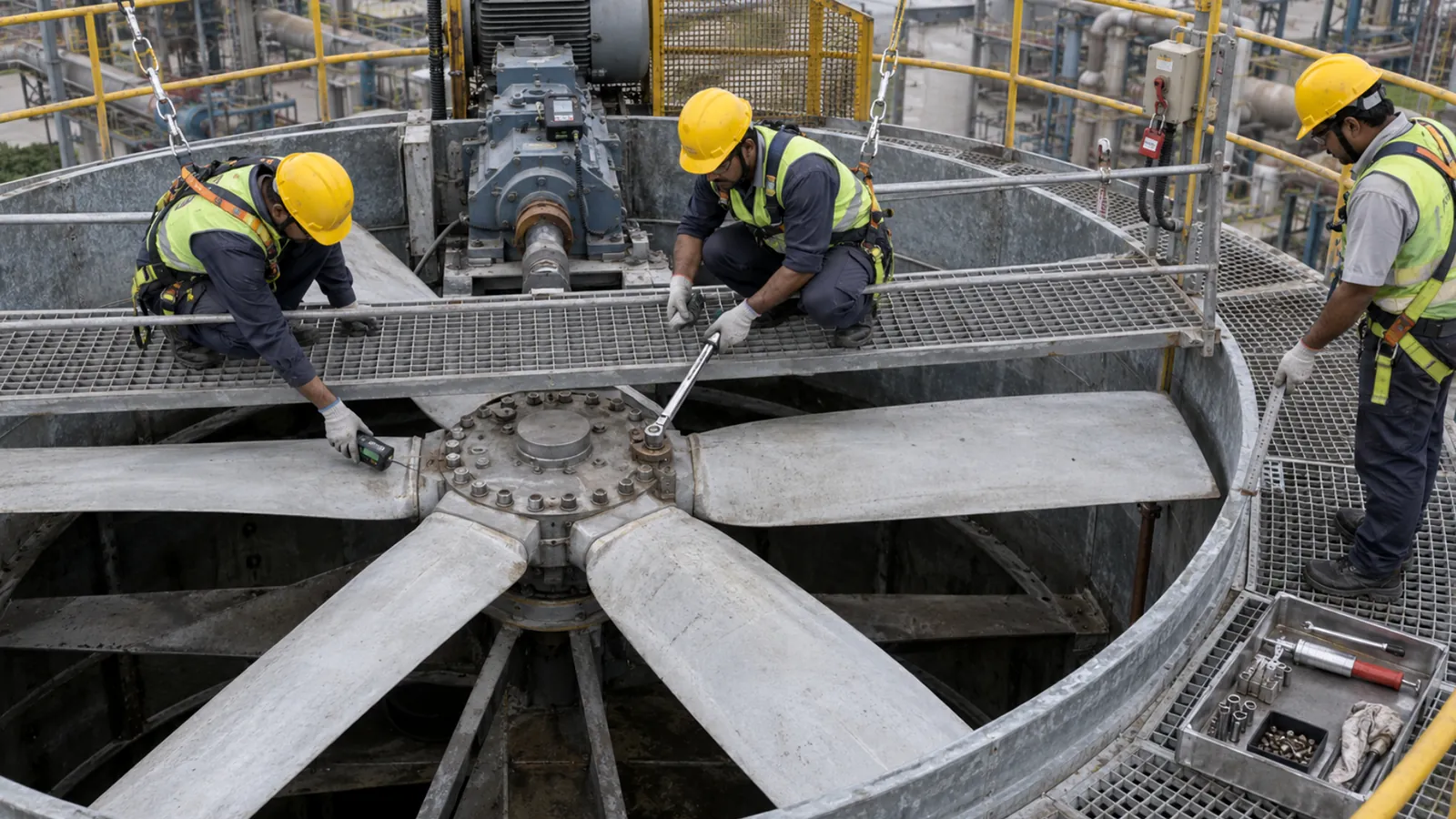
At the top of the tower, warm water flows in and covers fill media, which gives the highest surface area. This water is pulled through by fans or natural air currents, and evaporation commences to extract latent heat and cool the remainder by a few degrees, and this water is collected in a basin and sent back to the plant. That is why it is important to select good Industrial Cooling Tower Manufacturers in India to be more stable in the long-term performance. The simplified cycle appears as follows:
The cooling tower was originally referred to in patents within industries in the late 1800s, with the first condenser designs being developed in steam engines.
Virtually all heat-producing processes require a safe manner of rejecting heat and water-cooled systems are better than air-cooled systems. Refineries and steel mills rely on constant cooling to keep machinery in safe limits. This is particularly applicable to a cooling tower in thermal power plant operation where large quantities of water are cooled per minute to condense steam in turbines and to feed it back into the boiler cycle. Power generation, oil refineries, steel and cement plants and textile or pharmaceutical units are industries that are highly dependent on cooling towers.
Not all plants need the same cooling capacity and thus towers are available in various designs, all with different loads and costs. FRP, timber and atmospheric towers are the three most common designs to be installed in Indian industries.
The Frp Cooling Tower is constructed of fiber-reinforced plastic that is highly sought after in terms of corrosion resistance, lightness and strength in harsh chemical environments. Such structures do not rust as easily as metal shells and require much less maintenance throughout the life of operation. Since the panels are molded and not welded, production is quicker and the quality remains the same.
Key advantages include:
Until the advent of FRP and concrete cooling towers, Timber Cooling Towers were the standard in the industry. Constructed of treated wood, they provide a natural resistance to some chemicals, reasonable strength to moderate loads, reduced initial expense and simple assembly on-site in remote plants.
Nevertheless, they require frequent checking of the following problems:
In India, most of the older sugar mills and textile units continue to operate on wooden towers, although newer units are moving to FRP.
In the favorable wind locations, Atmospheric Cooling Towers do not need mechanical fans, since natural wind suffices to operate them, thus keeping the running costs low.
|
Cooling Tower Type |
Construction Material |
Best Suited For |
Maintenance Level |
|
FRP Tower |
Fibre-Reinforced Plastic |
Chemical, pharma, corrosive water plants |
Low |
|
Timber Tower |
Treated Wood |
Older setups, remote sites, medium loads |
High |
|
Atmospheric Tower |
Concrete/Steel Shell |
Large plants with favorable wind conditions |
Moderate |
There are natural-draft towers, which are more than 200 metres tall, higher than most skyscrapers, but which use not a single fan or motor indoors.
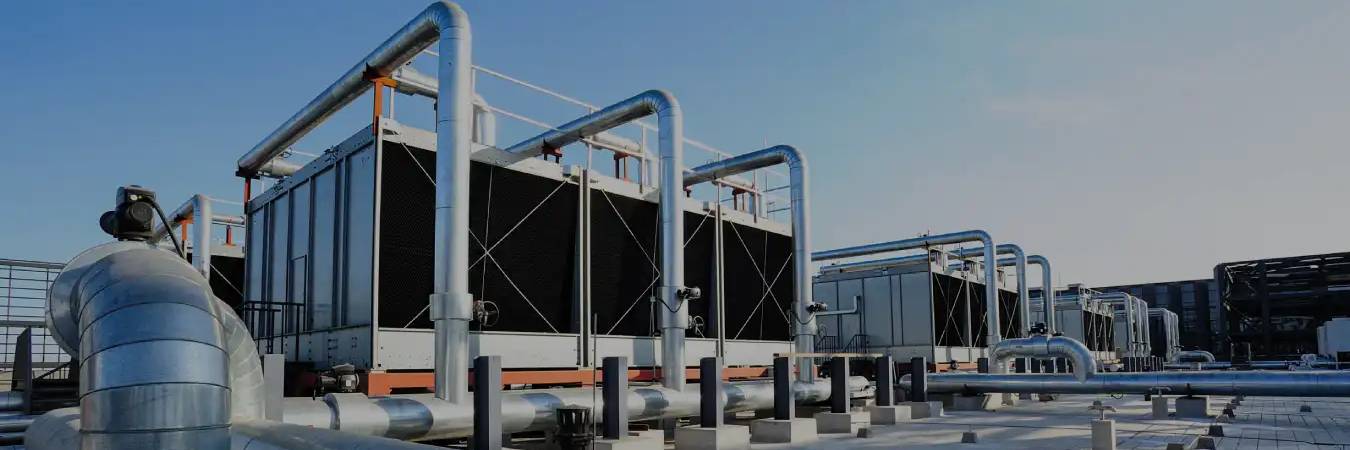
In addition to the factories, cooling towers HVAC are used to cool offices, malls and hospitals by rejecting heat generated by chiller systems to the atmosphere. In the absence of this step, chiller efficiency falls and energy bills may skyrocket on the peak summer days. HVAC towers of the correct size can offer a number of utilitarian advantages:
The water quality within a cooling tower is directly related to performance and equipment life. Unattended recirculating water will contain minerals, algae and bacteria, which over time will clog fill media and corrode metal components. That is why cooling tower water treatment cannot be considered an optional issue but a necessity that should be present in every installation, no matter its size or the industry.
Failure to treat water reduces tower life and increases the chances of unnecessary and expensive unexpected downtime.
The use of chemical dosing is used in conjunction with mechanical water treatment to safeguard the whole cooling system. Well-designed cooling tower chemicals ensure the scale, corrosion, and microbiological growth (algae and Legionella bacteria) are controlled in the recirculating water.
The omission of this step hastens the wearing of equipment, and disciplined dosing schedules provide longer tower life and reduced shutdowns.
Choosing equipment is not the end of the task; the correct supplier is equally important as far as reliability is concerned. As an Industrial Cooling Tower Exporter in India, SP Cooling Towers Pvt Ltd has established a reputation of being a reliable supplier of quality and efficient cooling towers to industries in the power generation, chemical, textile and HVAC markets both locally and abroad.
At SP Cooling Towers Pvt Ltd, we realize that each industrial plant has unique cooling needs. Being an established Industrial Cooling Tower Manufacturer, Suppliers and Exporter in India, we are offering engineered cooling systems that are configured to your heat load, water quality, operation and space availability.
Our FRP and timber cooling tower and bespoke industrial cooling systems are aimed at reliable performance, energy savings and lifespan. Our quality equipment and attentive after-sales service are known to support industries such as power generation, chemicals, pharmaceuticals, textiles, steel, cement and HVAC.
Our commitment goes beyond manufacturing—we aim to be your long-term cooling partner.
An effective cooling tower is not just a heat-rejection system; it is an important element in ensuring plant efficiency, equipment reliability, and continuous production. The correct type of tower to choose, correct water treatment, and a skilled manufacturer can greatly decrease operating issues and increase equipment life.
You need a new cooling tower, a specific solution or replacement equipment or you need expert advice on your current system, SP Cooling Towers Pvt Ltd can help you to get the solution to your application.
Need to find an appropriate industrial cooling tower? Contact SP Cooling Towers Pvt Ltd and talk to us about your cooling needs.
Share the flow rate, hot and cold water temperatures, and site wet-bulb for tower selection and a budgetary estimate.